Construction method statement: what it is and how to prepare one
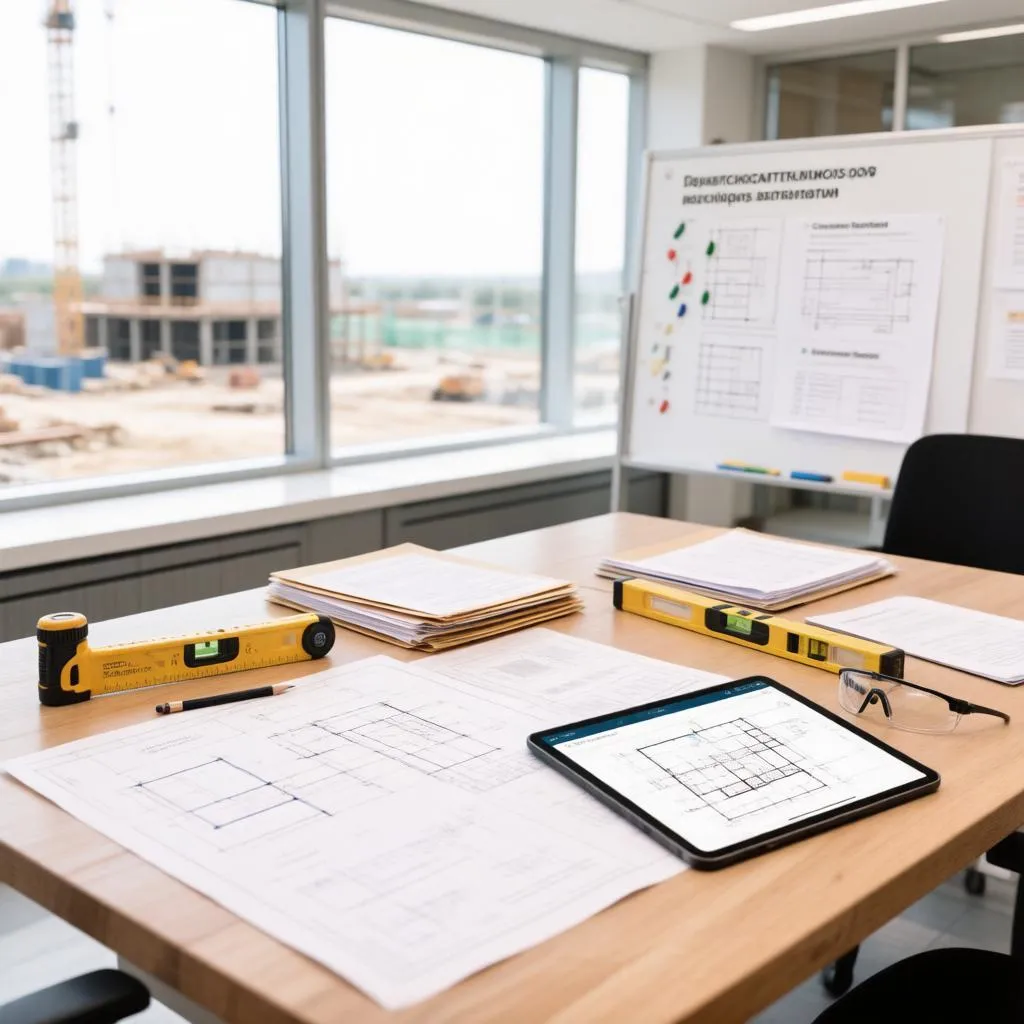
Before a single excavator starts digging or a scaffold pole goes up, someone has to explain exactly how the work will be carried out. That explanation, written down and agreed in advance, is the construction method statement — one of the most requested documents on UK construction sites, and one of the most routinely botched. Done well, it protects workers, reassures clients and smooths the path through building control, planning conditions and principal contractor duties. Done badly, it is a copy-pasted template that satisfies nobody and shields no one. This guide explains what a method statement actually is, when it is legally required, what it must contain, and how to write one that earns its place on the site file.
What a method statement is
A construction method statement is a document that describes, step by step, how a specific task or project will be carried out: the sequence of work, the plant and equipment involved, the controls that keep people safe, and the arrangements for dealing with anything unexpected. It is a plan before the plan meets reality — and its value lies almost entirely in being specific to the actual job.
The document sits alongside the risk assessment, and the two are frequently confused. The risk assessment identifies hazards and evaluates how dangerous they are; the method statement sets out how the work will be done so those hazards are controlled. In practice the best documents combine them, with the risk assessment driving the controls and the method statement embedding those controls into the working sequence. Health and safety practice in the UK treats them as two halves of the same planning process rather than two separate pieces of paper.
Method statements range from single pages for a straightforward task to multi-chapter documents for major civil engineering work. What matters is not length but specificity — a two-page statement written for the actual job at the actual site beats a forty-page generic document every time, and experienced reviewers can spot the difference in seconds.
When a method statement is required
There is no single law that says “every construction job needs a method statement,” but the circumstances in which one becomes necessary are broad and well-defined. The triggers are these.
- High-risk construction work. Activities such as work at height, deep excavation, lifting operations, demolition, confined spaces and work near live services are treated as requiring a documented method of working before they start.
- CDM 2015 duties. Under the Construction (Design and Management) Regulations, principal contractors and contractors must plan, manage and monitor construction work — and for anything beyond trivial risk, that planning is expected to be recorded. Clients and principal designers also frequently request method statements as part of the pre-construction information package.
- Client and contract requirements. Many clients, main contractors and frameworks make method statements a condition of appointment, refusing site access until the document is approved.
- Planning conditions and party wall matters. Some planning permissions attach conditions about construction methods — noise, vibration, protection of neighbouring property — which a method statement formally addresses.
- Insurance and permit-to-work systems. Certain tasks are controlled through permit systems that cannot be issued without an approved method statement behind them.
The common thread is that the method statement is triggered by risk and by contract, not by a universal legal threshold. A domestic extension may need a brief statement for the steelwork and the excavation; a warehouse fit-out may need one for every high-risk activity but nothing for routine, low-risk tasks.
What the document should contain
A usable method statement covers a consistent set of headings, regardless of project size. The core contents are these.
- Project and task description. What work is being done, where, and in what sequence — written so that a competent person unfamiliar with the job could follow it.
- Responsibilities and personnel. Who is in charge, who is supervising, what competencies and training are required for each role.
- Plant, equipment and materials. What machinery, tools and materials will be used, including lifting equipment details and certification where relevant.
- Sequence of work. The step-by-step method itself, including access arrangements, exclusion zones and the order in which elements are installed or removed.
- Control measures. The specific controls from the risk assessment mapped onto the working sequence — fall protection, shoring, dust suppression, traffic management and so on.
- Emergency arrangements. What happens if something goes wrong: first aid, evacuation, rescue from height, incident reporting.
- Monitoring and review. How compliance with the statement will be checked during the work, and when the document must be revisited — after changes, incidents or at defined intervals.
Not every statement needs every heading in depth, but a reviewer expects to find each one addressed. Omitting emergency arrangements or responsibilities is one of the most common reasons a statement is returned for revision.
Writing one that passes review
The difference between a method statement that gets approved first time and one that bounces back is almost always the level of specificity. Generic statements are easy to spot and easy to reject, because they describe work in the abstract rather than the actual site, the actual sequence and the actual controls. The comparison below shows how the same task reads when written generically versus written properly.
| Element | Generic wording (weak) | Site-specific wording (strong) |
|---|---|---|
| Work at height | Fall protection will be used where necessary | Edge protection at 1.2 m on all open edges; harnesses with anchor points at the designated eyebolts for the roof works stage |
| Excavation | Excavations will be supported as required | Trench 1.8 m deep on the east boundary supported with hydraulic trench boxes; digger exclusion zone 2 m from the edge |
| Lifting | Loads will be lifted safely | 2.5 t steel sections lifted by a 20 t mobile crane; certified slings, banksman in radio contact, exclusion zone taped before each lift |
The strong column works because it can be checked against reality. Someone reading it can picture the trench, the crane and the roof, and can verify on site whether the controls described are actually in place. That is the whole test a reviewer applies — and it is also the test the document must survive when something goes wrong and the written method becomes evidence of what was actually planned.
Common mistakes and how to avoid them
Most rejected or ineffective method statements fall into the same handful of traps. Recognising them before submission saves the round trip.
- Copy-paste from a previous job. References to the wrong address, the wrong client or tasks that do not exist on this project undermine the entire document’s credibility the moment a reviewer notices.
- Restating the risk assessment instead of describing the method. A statement that only lists hazards and controls, without the actual sequence of work, answers the wrong question.
- Controls that nobody can verify. Phrases like “where necessary” or “as required” shift the decision to whoever reads it, which is precisely what a method statement exists to avoid.
- Ignoring changes on site. A statement approved six weeks ago that no longer matches the work being done today is worse than no document at all, because it creates the appearance of control without the substance.
- Treating the document as bureaucracy. Statements written purely to satisfy a checklist, with no intention of following them, convert a planning tool into a liability. If an incident occurs and the actual work deviated from the written method, the document becomes evidence against the people who signed it.
Every one of these mistakes shares a root cause: the document was written after the thinking was finished, rather than as the record of the thinking itself. The remedy is to plan the job first, then write down the plan — not to download a template and fill in the blanks.
The practical workflow
For anyone preparing a method statement from scratch, the sequence is straightforward once broken into steps.
- Define the task precisely. Break the work into distinct activities — excavation, steelwork, roofing — each of which may warrant its own statement.
- Carry out the risk assessment first. Identify the hazards for each activity and decide the controls, because the method statement will embed them.
- Write the sequence. Describe the work in order, from access and preparation through to completion and hand-back.
- Map controls onto the sequence. State exactly where in the process each control applies, and who is responsible for checking it.
- Add the supporting details. Personnel, plant, training, emergency arrangements and monitoring arrangements.
- Have it reviewed by someone who knows the work. A supervisor or operative with hands-on knowledge will spot impractical steps that a desk-based writer misses.
- Brief the workforce and get sign-off. A method statement that the people doing the work have not read is a document, not a control. Toolbox talks and signed acknowledgement close the loop.
The final step is the one most often skipped, and it is the one that gives the document its real function. A method statement exists to be followed, briefed and updated — and the small discipline of walking the workforce through it before the job starts is what turns pages on a clipboard into a genuinely safer site.
Why the effort is worth it
A construction method statement is, at its core, a record of decisions made deliberately before the work begins. It forces the questions that otherwise get answered improvisationally at seven in the morning on a muddy site: how will this be lifted, who is watching the edge, what happens when the trench fills with water. The document itself is not the safety measure — the plan behind it is — but the act of writing it down exposes gaps while they are still cheap to fix. Teams that treat the method statement as a genuine planning tool find it pays for itself in fewer interruptions, cleaner approvals and a site file that holds up under scrutiny. Teams that treat it as paperwork end up with the worst of both worlds: all of the effort and none of the protection.