PTS card UK: how to get personal track safety certification
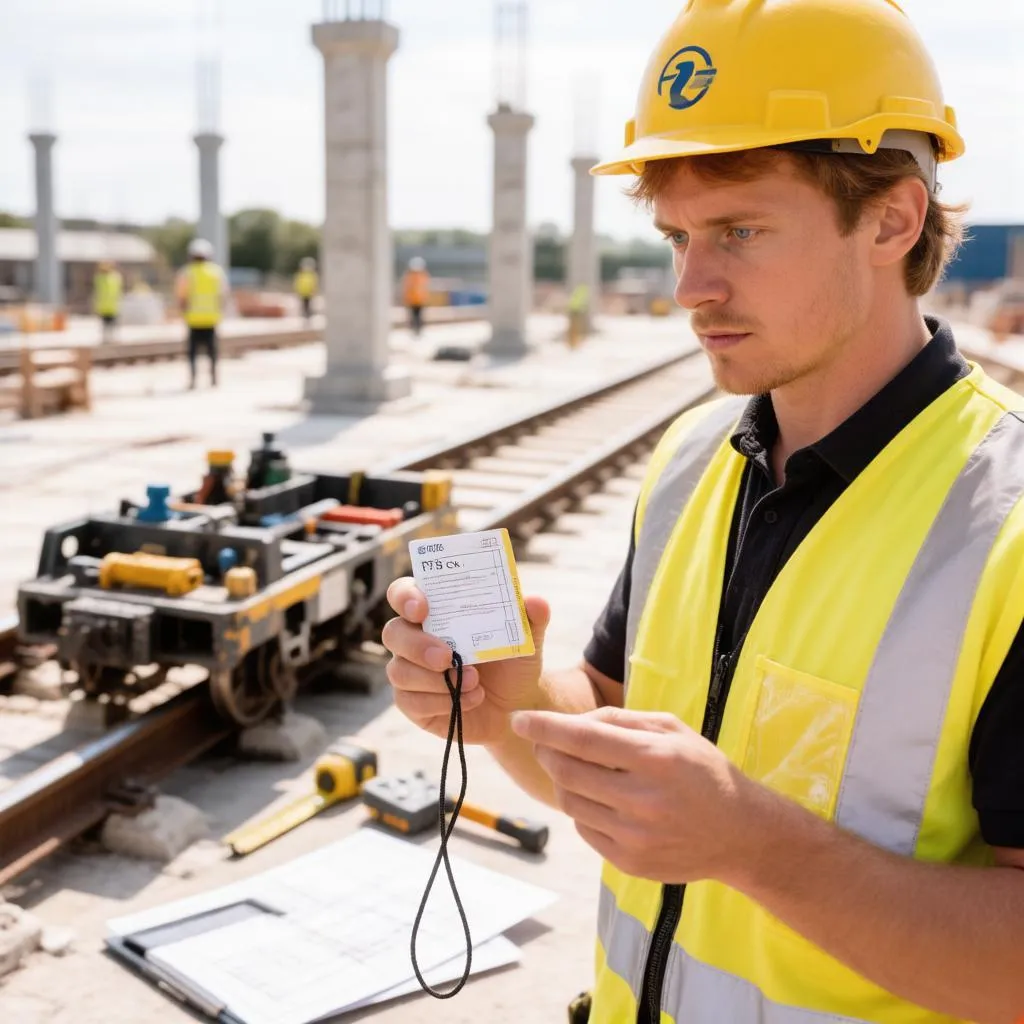
Every rail worker in the UK who steps onto or near the railway infrastructure carries the same small plastic card, and it is the single most important document in their working life. The Personal Track Safety certification — the PTS card — is the legal and practical gatekeeper between a person and the operational railway. NoPTS, no access: train operating companies, infrastructure contractors and labour agencies alike will not place a person trackside without it. Yet the process of obtaining one remains oddly opaque to newcomers, with questions about sponsorship, medicals, costs and renewals circulating as half-truths across forums and site canteens. This guide sets out the full picture: who needs a PTS card, what the training covers, how to get certified, and what to expect once the card is in hand.
What the PTS card is and who needs one
Personal Track Safety is the competence that allows a person to work on or near the operational railway in Great Britain. The certification demonstrates that the holder understands the dangers of the railway environment — trains passing at speed, electrification systems, the limits of safe positions — and knows the rules that keep them alive trackside. The PTS card itself is the credential, typically issued through the industry’s Sentinel scheme, which electronically records competencies and makes them verifiable by any employer or site controller instantly.
The card is needed far more broadly than many people assume. Beyond the obvious roles — track maintenance crews, signal installers, fencing contractors — it extends to anyone who might come within the railway’s safety zone.
- Track and civil engineering staff carrying out maintenance, renewal or construction work on or near the line.
- Cable, signalling and telecoms workers, whose work takes them alongside the running lines even when the equipment itself sits off-track.
- Surveyors, engineers and site supervisors who need to access the infrastructure to inspect or manage works.
- Support staff on rail sites, including drivers of plant, gangers and personnel delivering materials to trackside locations.
Anyone whose employment could place them within the railway boundary, even infrequently, should expect PTS to be a condition of access. The precise extent of the requirement is set by the site controller for each work site, but in practice the industry treats PTS as the universal entry ticket to railway employment.
What the training covers
A PTS course is not merely a formalities exercise — it teaches genuinely life-critical knowledge, and the assessments are rigorous enough that candidates regularly fail on first attempt. The core content covers the dangers of the railway: the sheer speed and quietness of modern trains, the minimum safe distances from the line, and the concept of absolute safety — the principle that nobody trackside relies on warnings alone for their survival. Electrification receives dedicated attention, since the third rail and overhead systems kill silently and instantly, and the safe systems of work surrounding them are among the most important knowledge a trackside worker holds.
Course content typically spans safe working rules, communication protocols, the use of warning equipment, emergency procedures, and the specific rules governing on-track plant and unassisted lookouts. Candidates sit written assessments and practical exercises, and the standard demands genuine understanding rather than rote recall.
How to get a PTS card step by step
The route to certification follows a defined sequence, and the first step trips up more newcomers than any other: nobody can simply book a PTS course as a member of the public. The industry requires sponsorship, meaning an employer or agency that takes responsibility for the worker’s competence and verification. The full sequence runs as follows.
- Secure sponsorship. Enrol with a rail labour agency or obtain employment with a rail contractor, who will sponsor the training application.
- Complete the medical assessment. A rail-industry medical, covering vision, hearing, colour perception and general fitness, must be passed before training.
- Pass the drug and alcohol screening. The rail industry operates a zero-tolerance policy, and negative screening is a precondition of certification.
- Attend the PTS initial course. Typically two to three days at an approved training centre, combining classroom instruction with trackside practical sessions.
- Pass the assessments. Written and practical tests must all be passed; unsuccessful candidates retrain and re-sit.
- Receive the Sentinel card. On certification, the competence is recorded on the national Sentinel database and the card is issued.
- Add site-specific inductions. Individual projects and routes often require further briefings before a person may work on that particular section of track.
The sponsorship requirement exists for a reason. The railway industry verifies that every certified person is accountable to an employer who has checked their identity, right to work and fitness for the role, which keeps the credential tied to genuine employment rather than circulating as a commodity.
Costs, duration and validity
Practical questions about money and time dominate the conversations of anyone considering rail work, and the honest answers are more variable than standardised. The figures below reflect typical industry experience rather than fixed tariffs.
| Element | Typical duration | Typical cost | Notes |
|---|---|---|---|
| Rail medical | 30–60 minutes | £60–£120 | Often repeatable with cheaper renewal medicals |
| Drug and alcohol screening | 15–30 minutes | £20–£60 | Sometimes bundled with the medical |
| PTS initial course | 2–3 days | £300–£600 | Fees frequently paid by the sponsoring employer |
| Card and registration | Same week as passing | Included or small admin fee | Issued through the Sentinel scheme |
| Recertification | 1 day, typically via e-learning | £100–£300 | Required at defined renewal intervals |
Sponsoring employers commonly absorb the initial costs as an investment in a worker they intend to deploy, while agencies may deduct training fees from earnings — an arrangement worth understanding clearly before signing on. What is consistent across all arrangements is that the certification belongs to the holder’s record, meaning the investment survives a change of employer and opens doors across the entire industry.
Keeping the card alive: renewals and additional competencies
PTS certification does not run indefinitely. Track safety competencies are refreshed at defined intervals through the industry’s e-learning and assessment systems, with workers required to demonstrate continued knowledge rather than simply pay a renewal fee. Missing the renewal window means the card lapses and the holder cannot work trackside until recertified — a situation that has cost many workers their deployment and agencies their placements. Setting personal reminders well ahead of expiry is one of the simplest pieces of career insurance in rail work.
The initial PTS is also just the beginning of the competency ladder. Workers commonly progress by adding endorsements and qualifications on top of their base certification.
- Lookout and site warden roles, the traditional entry points into safe systems of work and often the first paid specialisation.
- Individual Working Authority (IWA), enabling a person to work alone in a safety zone under defined conditions.
- Controller of Site Safety (COSS), the competence that puts a person in charge of safe systems of work for a group, and a standard requirement for anyone leading trackside teams.
- Plant and machinery endorsements, extending PTS holders into operating on-track plant and specialist equipment.
- Specialist engineering competencies, covering signalling, electrification, welding and similar technical disciplines.
Each added competence expands the range of work a person can be deployed on and typically raises the day rate they can command. The pattern across the industry is consistent: the PTS opens the door, and the competencies stacked on top of it determine how far through the door a worker walks.
Common mistakes and misconceptions
Newcomers to rail work fall into a handful of recurring traps, each of which wastes money or blocks employment. The most common are these.
- Booking training without sponsorship. Approved training centres require a sponsoring employer or agency before admitting candidates, and un-sponsored bookings are simply refused.
- Assuming any medical will do. The rail industry requires its specific medical standard, and a GP fitness note does not satisfy it.
- Underestimating the assessments. A proportion of candidates fail the initial course on first attempt, usually through underestimating the volume of rules rather than through difficulty of the material itself.
- Letting the card expire. Lapsed competencies mean full recertification rather than a quick refresher, and deployments vanish while the paperwork catches up.
- Buying into “guaranteed work” schemes. Unscrupulous operators charge large fees for training bundled with promises of employment that never materialise. Reputable sponsors charge transparent fees and explain the terms plainly.
Each of these mistakes is avoidable with a few minutes of verification before any money changes hands — checking the sponsor’s identity, confirming the training provider’s industry approval and reading the payment terms carefully.
The first step of a railway career
The PTS card is the foundation on which every railway career in the UK is built, and the process of obtaining it is more accessible than its reputation suggests. Sponsorship from an employer or agency, a medical and drug screening, two to three days of focused training and a set of assessments stand between a newcomer and trackside work — with costs frequently borne by the sponsoring employer and the credential lasting years and surviving job changes. What the card requires in return is genuine engagement: the rules it certifies exist because the railway remains one of the most unforgiving working environments in the country, and the workers who thrive in it are the ones who treat the knowledge as real rather than as paperwork. Get the sponsorship, pass the medical, learn the rules properly, and the card does exactly what it promises — the key to an industry that is, for those who work in it, unlike any other.