Water main replacement in urban environments: live connections, shutdowns and customer notifications
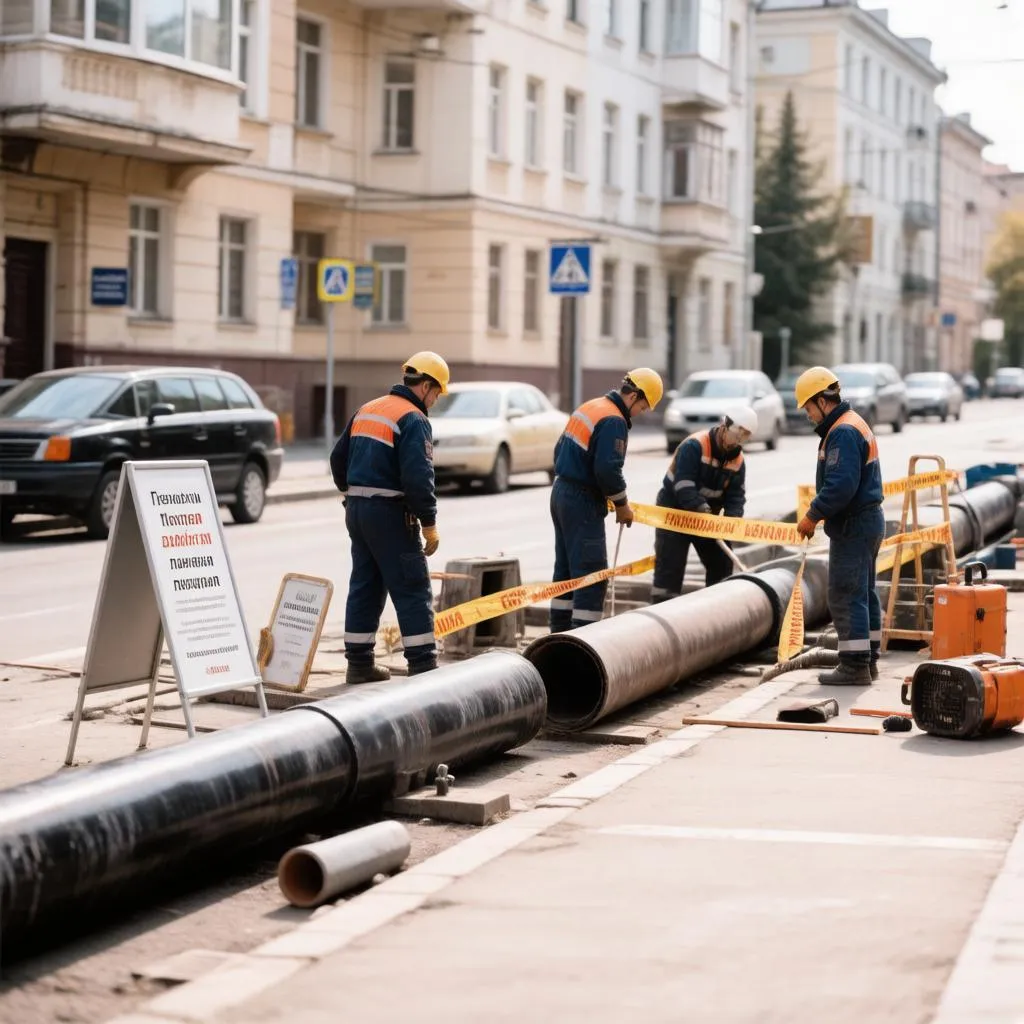
The trickiest part of replacing a water main is not the trench. It is everything around the trench: the traffic that has to keep moving, the hospitals that cannot lose pressure, the businesses whose customers will not tolerate a third consecutive day without water, and the residents who judge the entire water utility not by the quality of the pipe but by the quality of the letter that arrived before the works did. Urban water main replacement is, in practice, as much a communications and logistics exercise as a civil engineering one — and the utilities that master this combination deliver renewal programmes measured in years of public goodwill, while the ones that treat notifications as paperwork spend their budget apologising instead of laying pipe.
What has changed in recent years is the toolkit. Trenchless methods, live wet-tapping, under-pressure connections and valve-insertion techniques mean that the traditional full shutdown — the weekend when an entire street loses supply — is now often avoidable rather than inevitable. Where shutdowns remain necessary, better planning, staged isolation and disciplined customer communication have compressed their footprint dramatically. The result is a discipline with a clear division: engineering determines what is possible, and logistics and communication determine what is acceptable. Both halves matter, and both are covered here in the order a real programme approaches them.
Why urban mains fail: the case for renewal
Water mains in older cities are replaced for reasons that go far beyond leaks. The deterioration mechanisms driving modern renewal programmes:
- Pipe material degradation. Cast iron and spun iron mains — still the backbone of many legacy networks — corrode from the outside in, thinning walls until the classic circular blowouts appear. Asbestos cement pipes become brittle with age and fracture under ground movement.
- Transient pressure events. Sudden valve closures and pump trips create pressure surges that weak pipes cannot absorb; each transient event stresses the network in ways the design never anticipated.
- Climatic loading. Prolonged droughts shrink clay soils and shear pipes; freeze-thaw cycles split them from the inside. Climate variability has accelerated the failure statistics of networks already past their design life.
- Demand and regulatory pressure. Leakage targets, water scarcity planning and regulatory obligations to reduce supply losses are pushing utilities to replace networks faster than pure failure statistics alone would justify.
The economics of renewal are unforgiving: reactive repair of failures costs multiples of planned replacement once emergency callouts, customer compensation, property damage and reputational cost are counted. The question is never whether to replace, but in what order, by what method, and with how much disruption.
The method decision: trench, trenchless or hybrid
Every job starts with the same fork: dig it open, or don’t. The comparison that drives the choice:
| Method | Best suited to | Typical cost profile | Disruption level | Key constraints |
|---|---|---|---|---|
| Open-cut replacement | Failing pipes, roads already due for resurfacing | Lower direct cost, higher reinstatement cost | High; full road closure often needed | Requires excavation, traffic management, service crossings |
| Pipe bursting | Like-for-like renewal, clay or ductile hosts | Moderate | Moderate; launch and reception pits only | Upsizing limited; displacement must fit the trench |
| Sliplining and CIPP | Structurally sound hosts needing internal renewal | Higher per metre, minimal reinstatement | Low; most work from chambers | Diameter reduction; host must be cleaned and prepared |
| Live insertion / valve insertion | Adding valves without shutdowns | Low; targeted | Very low | Fitting tolerances; pipe condition at insertion point |
The table’s practical message: trenchless does not mean cheap — it means cheap in disruption. Utilities increasingly price the two columns separately, and once customer impact, traffic delay and reinstatement risk are monetised, the trenchless option frequently wins on jobs where its direct cost looked unattractive. The hybrid approach — open-cut where the road is already open for other works, trenchless where it is not — is the emerging default in dense urban programmes.
Live connections: working without the shutdown
The traditional isolation sequence — close valves, depressurise, drain, cut, connect, disinfect, flush, restore — is increasingly being replaced by under-pressure techniques. The main options and their logic:
- Wet tapping. A tapping sleeve and valve are bolted onto the live main, and a hole is cut through under pressure. The main is never shut down; the new connection is made live. This is now standard practice for adding new service connections and branch mains, and it has removed the majority of planned supply interruptions for small works.
- Valve insertion. Where an existing main needs a new isolation point, a fitting that slices into the live pipe and installs a valve under pressure means future maintenance can be isolated locally — turning every future job into a smaller, shorter event.
- Pipe freezing. For short, localised works, liquid nitrogen or CO₂ can freeze the water column and create a temporary ice plug, allowing a dry connection without draining the section. It is a specialist technique with tight time limits, but it eliminates shutdowns on small-diameter work.
- Staged isolation. Where a shutdown is unavoidable, looped networks allow supply to be rerouted through parallel mains so that only the smallest necessary segment loses pressure — often a single street block rather than a district.
The engineering caveat is that live techniques have prerequisites: the main must be in a condition to be cut or sleeved, pressures must be manageable, and the water quality risk during any connection must be controlled with disinfection and flushing regimes. Live connection is not a licence to cut corners on hygiene — a contamination event during an under-pressure connection is precisely the incident that turns a routine job into a public-health headline.
When shutdowns are unavoidable: the planning discipline
Some jobs still require the main to come out of service, and the difference between a tolerable shutdown and a public-relations crisis lies almost entirely in the preparation. The sequence that works:
- Model the isolation before committing to it. Hydraulic analysis confirms which customers lose supply, whether critical customers — hospitals, schools, care homes — sit inside the isolated zone, and whether pressure can be maintained through rerouting. Discovering a care home on the isolated section on the morning of the shutdown is a planning failure, not bad luck.
- Choose the window by customer, not by crew convenience. Overnight and early-morning windows minimise business impact; weekends suit residential streets; school-term timing matters in catchments with schools. A shutdown that fits the crew but not the street will be remembered longer than the works themselves.
- Plan for the failure of the plan. Every shutdown has a contingency: standby crews, bottled water on site before it is needed, a communication line that is answered, and a decision point — declared in advance — for aborting and restoring supply if the works overrun.
- Control the water quality restart. Flushing, sampling and disinfection verification are part of the shutdown’s duration, not an afterthought. Returning supply before the water is confirmed safe converts a planned outage into a boil-water notice.
The professional standard is simple to state and hard to meet: the shutdown should be the shortest possible, announced clearly, and executed inside the announced window — because a shutdown that overruns destroys the credibility of every future notification the utility will send.
Customer notifications: the discipline that buys permission
Notification is where water utilities win or lose the street, and the practice has matured from leaflets in letterboxes to a genuine communications discipline. The principles that separate good practice from compliance theatre:
- Multiple channels, escalating intensity. A letter 7 to 14 days ahead, a reminder card 48 hours before, on-street signage the day before, and same-day text or app alerts for affected properties form the baseline; high-impact shutdowns add door-knocking by the crew the evening before.
- Language of the actual impact. Customers do not experience «planned works»; they experience whether the water stops, when, for how long, and whether the kitchen tap will run brown afterwards. Notifications that say exactly that — start time, end time, what to do with the first glass of water afterwards — are read; notifications about engineering scope are recycled. 3 A named contact and a live status. Every notification should carry a phone number that is actually staffed during the works, and increasingly utilities run live status pages or SMS updates as the job progresses — turning a period of uncertainty into a managed sequence.
- Business and vulnerable-customer handling. Commercial customers need lead time to plan around the interruption; customers on the priority services register — elderly, medically dependent, dialysis patients — need direct contact and, where supply cannot be maintained, alternative arrangements agreed in advance, not improvised on the morning.
- The apology-and-completion note. A closing communication after works complete — confirming restoration, thanking the street and inviting feedback — closes the loop and measurably improves satisfaction scores for the next phase of the programme.
Utilities that treat notifications as part of the engineering scope — budgeted, planned and quality-controlled with the same rigour as the pipe itself — consistently report smoother shutdowns, fewer complaints, and crews who spend their time welding rather than arguing with residents.
Traffic, access and the street’s other stakeholders
A water main replacement in an urban street shares space with an ecosystem of other interests, and the job that ignores them fails on all of them. The stakeholders and their demands:
- Traffic authorities. Permits, diversion routes, bus operator consultation and parking suspension all need lead time measured in weeks; a traffic-management plan is an engineering document in its own right.
- Emergency services. Fire authorities require assurance of hydrant availability and fire-flow during works; losing a hydrant without notice is a safety event, not an administrative one.
- Other utilities. Service records are notorious for their optimism; trial holes, service location surveys and the expectation that gas and telecoms will be exactly where they were not marked are part of the civil engineering reality of urban digging.
- Local businesses. Access must be maintained to shopfronts wherever physically possible, and the «business as usual» signage on the hoarding matters more to a café’s takings than any engineering detail.
The programmes that run smoothly treat the street as a shared resource with a schedule negotiated among all its users — and the ones that run badly are almost always the ones where one utility assumed it owned the week.
Water quality, testing and handover
No main replacement is complete until the network it feeds is verified safe. The handover sequence is standardised for good reason: newly installed or renewed mains carry construction debris, air and the potential for contamination at every connection point. Disinfection — typically by chlorination of the new section, with contact time calculated against the pipe volume — is followed by flushing at controlled velocities, then microbiological and chemical sampling on successive days before the new main is connected permanently into supply. Only when two consecutive clean samples are confirmed does the renewed main enter service in full.
Utilities occasionally face commercial pressure to compress this sequence, and the industry’s accumulated experience is unambiguous: the sampling regime is the cheapest insurance in the entire programme. The cost of a few extra days of temporary supply arrangements is trivial against the cost of a confirmed contamination event, which runs to emergency notices, alternative water supply operations, regulatory scrutiny and years of public distrust.
Conclusion
Water main replacement in urban environments succeeds or fails on a three-legged platform: engineering method, operational logistics and customer communication. Live connections and trenchless techniques have shrunk the traditional shutdown from a neighbourhood event to a targeted intervention, but they have not eliminated the need for isolation — and where shutdowns remain, their tolerability is determined almost entirely by preparation: modelled isolations, customer-centred timing, contingencies planned in advance and a water-quality restart that is never rushed.
The notification discipline is the part most often undervalued and least often forgiven when neglected. Customers tolerate planned disruption with remarkable grace when they are told the truth in advance, updated while it happens and thanked afterwards — and they tolerate nothing of the sort when they discover the shutdown by finding the water off. For utilities running long-term renewal programmes, that asymmetry is the strategic lesson: the pipes are replaced once every century, but the trust that makes each replacement possible has to be rebuilt street by street, year after year — and it is built, in the end, with the same tools: good engineering, honest notices and crews who turn up when the letter said they would.