CE marking under UKCA: what changed for structural steelwork after Brexit
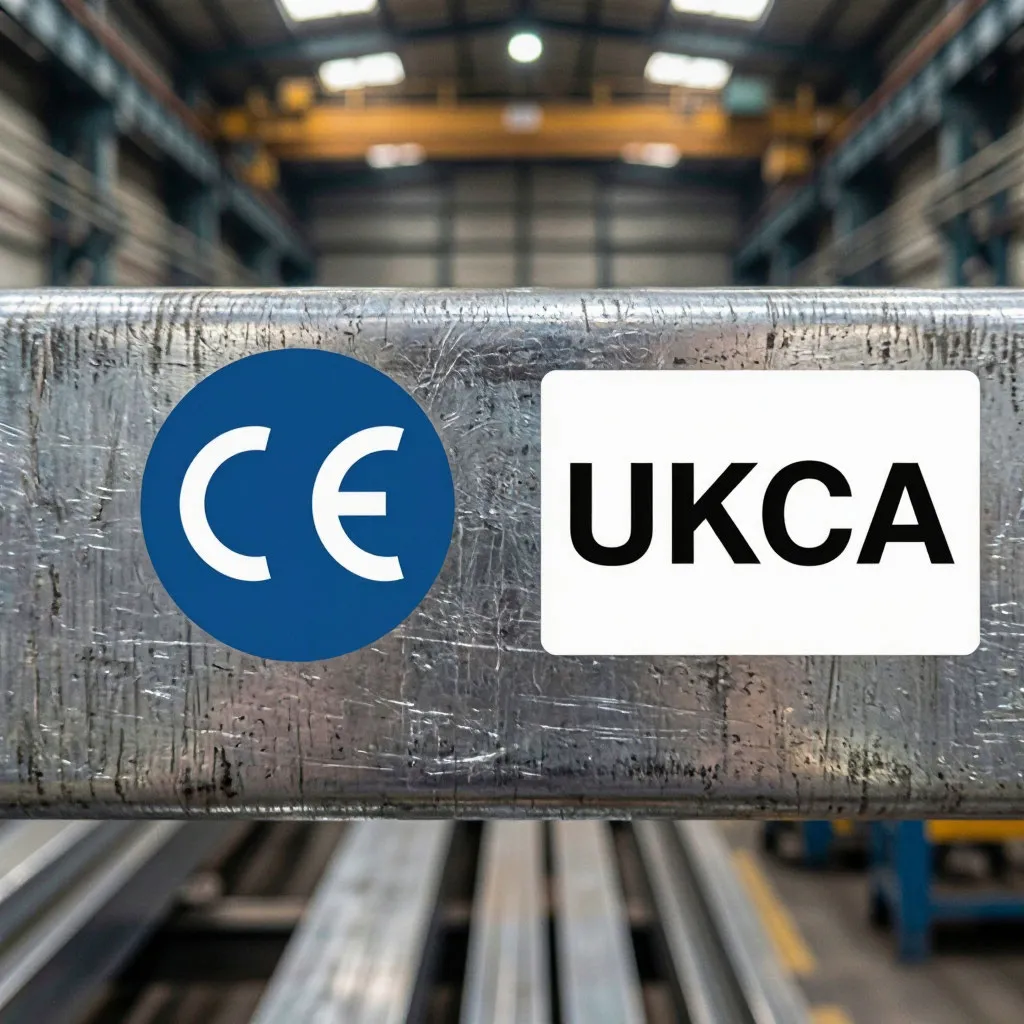
If you manufacture structural steelwork in the UK, the word “Brexit” did not end on 31 January 2020. It mutated into a rolling administrative challenge that has consumed compliance budgets, delayed projects, and forced fabricators to rethink how they certify every beam, column, and bracket that leaves their workshop. The structural steel sector — long accustomed to a single European framework under EN 1090 and the Construction Products Regulation — found itself split between two regulatory worlds: one for Great Britain, one for the EU, and a third operating in Northern Ireland that borrows from both. For an industry where a single certificate can determine whether a lorry of fabricated steel clears the gates of a construction site, this fragmentation has been anything but theoretical.
The core question that fabricators, contractors, and specifiers keep asking is deceptively simple: what changed, what do I actually need to do now, and how do I stay compliant without doubling my certification costs? Answering that requires understanding not just the headline political decisions but the granular technical differences between CE marking and UKCA marking, the timeline of deadline extensions that have repeatedly shifted the goalposts, and the specific documentation and audit requirements that apply to structural steelwork under EN 1090.
The difference between CE marking and UKCA marking at a practical level
At a technical level, the standards themselves have barely moved. The UK government carried over all existing EU harmonised standards into UK law as “designated standards,” meaning that a product manufactured to BS EN 1090-1 for CE marking meets essentially the same technical requirements as one manufactured for UKCA marking. The steel does not change. The welding procedures do not change. The execution classes remain the same. What changes is the regulatory framework that sits on top of the technical content — who assesses conformity, which mark appears on the product, and which declaration accompanies it.
CE marking requires conformity assessment by an EU Notified Body — an organisation designated by an EU member state to certify products under the EU Construction Products Regulation (Regulation 305/2011/EU). The product carries the CE logo, is accompanied by a Declaration of Performance (DoP), and can be placed on the market anywhere in the European Economic Area. UKCA marking requires conformity assessment by a UK Approved Body — an organisation designated by the UK government under the UK Construction Products Regulation. The product carries the UKCA logo, is accompanied by a UK Declaration of Performance (UK DoP), and can be placed on the market in England, Scotland, and Wales. Northern Ireland follows separate rules that require CE marking (with an additional UKNI mark if certified by a UK body) because it remains aligned with the EU single market under the Windsor Framework.
The practical consequence for a fabricator who supplies both UK and EU markets is stark: you need two certifications, two conformity assessments, two declarations, and two marks. The standards are the same, the factory is the same, the welders are the same — but the paperwork and the logo on the delivery ticket must match the destination market.
The timeline: a history of moving deadlines
Understanding the current state of compliance requires tracing the timeline, because the UK government has changed the rules — or at least the deadlines — so many times that even compliance professionals struggle to keep track. What began as a clean break scheduled for 1 January 2022 has evolved into a series of extensions that have left the industry in a state of permanent uncertainty about when CE marking will truly cease to be accepted in Great Britain.
The key milestones in this regulatory journey are essential context for any fabricator planning their certification strategy:
- 1 January 2021: UKCA marking becomes available for construction products in Great Britain under the UK Construction Products Regulation. CE marking continues to be accepted during a transition period. UK Approved Bodies begin operating, replacing the role previously held by EU Notified Bodies for the GB market.
- Original deadline — 1 January 2022: UKCA marking was initially set to become mandatory, replacing CE marking for construction products sold in Great Britain. This deadline was extended as industry struggled to prepare.
- First extension — 1 January 2023: The deadline was pushed to give businesses more time, particularly those facing difficulties in finding UK Approved Bodies with the necessary accreditations.
- Second extension — 31 December 2024: Another extension, this time framed as a broader government decision to ease the burden on industry and acknowledge the ongoing disruption caused by the transition.
- Third extension — 2 September 2024 announcement: The UK government announced that the 30 June 2025 deadline for construction products would be revoked. CE marking for construction products would continue to be accepted in Great Britain until further notice, with a commitment to provide a minimum of two years’ notice before any future deadline.
- Current position (September 2026): CE marking remains accepted for construction products in Great Britain. UKCA marking is available and encouraged but not yet mandatory. The government has not set a new deadline for the end of CE marking recognition for construction products.
For structural steelwork fabricators, the practical effect of these repeated extensions is a dual-marking environment that has persisted far longer than anyone anticipated. Most reputable fabricators — including major producers like Tata Steel UK and British Steel — have adopted dual certification, carrying both CE and UKCA marks to ensure unrestricted market access regardless of when or whether the government finally closes the door on CE marking.
EN 1090: the standard that sits behind every mark
Whatever mark appears on a fabricated steel component — CE, UKCA, or CE+UKNI — the technical standard that governs its conformity is BS EN 1090. Understanding how this standard works is essential for any fabricator navigating the post-Brexit landscape, because the certification process, the audit requirements, and the documentation all flow from this standard.
BS EN 1090 has three parts. Part 1 (BS EN 1090-1) covers the requirements for conformity assessment of structural components — it defines what must be tested, declared, and controlled to affix a conformity mark. Part 2 (BS EN 1090-2) specifies the technical requirements for the execution of steel structures, including tolerances, welding, material specifications, and inspection requirements. Part 3 (BS EN 1090-3) covers the equivalent requirements for aluminium structures. For structural steelwork manufacturers, Parts 1 and 2 are the relevant documents.
The conformity assessment system under EN 1090-1 operates under what the CPR calls “System 2+” — the most demanding level of assessment and verification of constancy of performance. Under System 2+, the manufacturer is responsible for initial type-testing of the product, implementing a Factory Production Control (FPC) system, appointing a Responsible Welding Coordinator (RWC), implementing a Welding Quality Management System (WQMS) conforming to BS EN ISO 3834, and conducting further testing of samples taken at the factory according to a prescribed test plan. The Approved Body (or Notified Body, for EU certification) is responsible for the initial inspection of the manufacturing plant, initial inspection of the FPC, and continuous surveillance through annual audits to ensure continued competence at the declared Execution Class.
This dual responsibility — manufacturer documents and controls, Approved Body audits and certifies — is the backbone of structural steelwork certification and has not changed between the CE and UKCA regimes. What has changed is the identity of the body doing the auditing.
Execution classes explained: matching certification to project risk
EN 1090-2 defines four Execution Classes that determine the stringency of fabrication, inspection, and quality control requirements. The Execution Class for a structure is specified by the design engineer based on the Consequence Class (risk to human life if the structure fails), the Production Category (complexity of fabrication), and the Service Category (type of loading). Getting this right matters enormously: a fabricator certified to EXC2 cannot legally supply components for a project that requires EXC3.
| Execution class | Typical structures | Welding requirements | RWC required | Inspection level | Default class? |
|---|---|---|---|---|---|
| EXC1 | Agricultural buildings, simple welded structures up to S275 | Basic welding procedures | No | Visual inspection | No |
| EXC2 | Residential and commercial buildings, common structural frames | Qualified welding procedures, ISO 3834 Part 3 | Yes | Visual + NDT as specified | Yes (when unspecified) |
| EXC3 | Bridges, stadia, structures with high consequence of failure | Enhanced welding qualifications, ISO 3834 Part 2 | Yes | Enhanced NDT, stricter tolerances | No |
| EXC4 | Nuclear structures, long-span bridges, seismic-critical buildings | Highest welding and inspection standards | Yes | Full NDT, maximum traceability | No |
The default Execution Class is EXC2 when the designer does not specify otherwise, which covers the majority of building construction in the UK. A fabricator certified to a higher class can supply to lower-class projects — an EXC3-certified contractor can fabricate EXC2 components — but the reverse is not permitted. This hierarchical system means that fabricators seeking maximum market coverage should aim for at least EXC3 certification, though the audit costs and welding qualification requirements increase significantly at that level.
What a fabricator needs to demonstrate UKCA marking compliance
To legally affix the UKCA mark to fabricated structural steelwork placed on the Great Britain market, a steelwork contractor must produce three key documents. The absence of any one of these renders the marking invalid and the product non-compliant.
The first is a Factory Production Control Certificate, issued by a UK Approved Body after initial inspection of the manufacturing plant and ongoing annual surveillance audits. This certificate confirms that the fabricator operates a documented FPC system covering material sourcing and traceability, welding procedures, welder qualifications, inspection and testing, non-conformance management, and record-keeping. The certificate specifies the Execution Class or Classes for which the fabricator is certified.
The second is a Welding Certificate, also issued by a UK Approved Body, confirming that the fabricator’s Welding Quality Management System complies with the relevant part of BS EN ISO 3834 and that a Responsible Welding Coordinator with proven competence is appointed. The RWC oversees all welding activities, ensuring that welding procedures are qualified, welders are coded to the appropriate standards, and welding consumables are stored and used correctly. For EXC2 and above, the RWC is a mandatory appointment, and their competence must be demonstrated through qualifications recognised by the Approved Body.
The third is the UK Declaration of Performance, issued by the fabricator themselves. This document declares the performance characteristics of the structural steelwork product against the relevant designated standard, including load-bearing capacity, fire resistance, durability, and dangerous substances. The UK DoP must accompany the product — either as a physical document or available electronically — and must reference the FPC certificate and the Welding Certificate from the Approved Body. It must include the UKCA mark, the name and address of the manufacturer, the product identification, the designated standard used, and the intended use of the product.
The Approved Body problem: who can certify your steelwork
One of the most significant practical challenges of the UKCA transition has been the availability and capacity of UK Approved Bodies. Under the CE marking regime, fabricators could choose from dozens of EU Notified Bodies — organisations like TÜV Nord, DNV, and Lloyd’s Register, many of which had decades of experience in construction product certification. After Brexit, only bodies with UKAS accreditation and specific designation under the UK CPR could issue FPC certificates for UKCA marking.
The pool of UK Approved Bodies competent in EN 1090 is considerably smaller. Organisations like BBA (British Board of Agrément), BM TRADA, and SCCS have been designated as Approved Bodies and offer UKCA certification for structural steel. However, capacity constraints — particularly in the early years of the transition — led to long lead times for initial audits and, in some cases, price increases compared to EU Notified Body fees. Several EU Notified Bodies established UK subsidiaries or partnered with UK Approved Bodies to offer dual certification under a single audit stream, which has helped ease the bottleneck. For example, BBA has partnered with various EU Notified Bodies to allow FPC certification for both UKCA and CE marking to be handled under one audit, reducing the administrative and cost burden on fabricators serving both markets.
Fabricators who already held CE marking certification from an EU Notified Body that has since become a UK Approved Body (or partnered with one) were able to transition to UKCA marking with minimal additional effort — in some cases, without recertification until their next scheduled audit. This “fast-track” approach was specifically anticipated in government guidance, which stated that existing certificates issued before 31 December 2024 could be used for UKCA marking until their expiry date or until 31 December 2026, whichever came sooner.
The Northern Ireland dimension: a third set of rules
Northern Ireland occupies a unique position in the post-Brexit regulatory landscape. Under the Windsor Framework (formerly the Northern Ireland Protocol), Northern Ireland remains aligned with the EU single market for goods, meaning EU rules on construction products — including the EU Construction Products Regulation — continue to apply. Construction products placed on the Northern Ireland market must carry CE marking, not UKCA marking alone.
If a UK-based fabricator manufactures structural steelwork in Great Britain and wants to sell it in Northern Ireland, the product must carry CE marking issued by an EU Notified Body. If the conformity assessment was carried out by a UK Approved Body rather than an EU Notified Body, the product must additionally carry the UKNI mark alongside the CE mark. The UKNI mark is not a standalone mark — it always appears alongside the CE mark and indicates that the conformity assessment was performed by a UK body rather than an EU one.
For fabricators supplying all three markets — Great Britain, Northern Ireland, and the EU — the marking requirements are as follows: Great Britain requires UKCA marking (with CE marking still accepted during the current transition); Northern Ireland requires CE marking (plus UKNI if certified by a UK body); the EU requires CE marking issued by an EU Notified Body. A fabricator with dual certification from both a UK Approved Body and an EU Notified Body can affix both the UKCA and CE marks to the same product, covering all three markets with a single marking scheme.
Common compliance failures and how to avoid them
The complexity of the post-Brexit regulatory landscape has created numerous opportunities for compliance failures, some of which can have serious legal and commercial consequences. Trading Standards enforces the Construction Products Regulations 2013 and has the authority to prosecute non-compliant manufacturers, with penalties including fines and, in serious cases, imprisonment of up to three months on summary conviction. Beyond the legal risk, non-compliant fabricators risk being removed from approved supplier lists by main contractors who are themselves legally responsible for ensuring that construction products they install carry the correct marking.
Several recurring compliance failures are worth highlighting because they tend to catch fabricators by surprise:
- Assuming one certificate covers both markets: a fabricator whose FPC certificate was issued by a UK Approved Body cannot use that certificate to affix CE marking for the EU market. The CE mark requires certification by an EU Notified Body. Similarly, an EU Notified Body certificate cannot be used for UKCA marking (except during the transitional fast-track period). Fabricators serving both markets need both certifications.
- Missing the Responsible Welding Coordinator appointment: the RWC is mandatory for EXC2 and above. A fabricator who has not formally appointed an RWC with documented competence — or whose RWC has left the company without a replacement being qualified — is operating outside compliance, regardless of the quality of their welding.
- Failing to update the UK Declaration of Performance when product characteristics change: the DoP must accurately reflect the performance characteristics of the specific product being supplied. If a fabricator changes material grades, welding procedures, or execution specifications, the DoP must be updated to reflect these changes.
- Applying the wrong mark to the wrong market: sending CE-marked-only steelwork to Great Britain after the eventual end of the transition period, or sending UKCA-marked-only steelwork to Northern Ireland or the EU, constitutes a breach of the respective regulations.
- Overlooking the physical marking requirements: the UKCA mark must be at least 5mm high, affixed visibly, legibly, and permanently to the product, packaging, or accompanying documentation. Until 31 December 2027, the UKCA mark can be applied on a temporary label, sticky label, or accompanying document; after that date, it must be permanently applied to the product itself.
- Letting the FPC certificate lapse: annual surveillance audits are mandatory, and a lapsed certificate means the fabricator can no longer legally affix the conformity mark. Missing an audit window by even a few weeks can create a gap in certification that renders all steelwork produced during that period non-compliant.
Each of these failures is preventable with proper compliance management, but they tend to occur when fabricators treat certification as a one-time achievement rather than an ongoing obligation. The FPC system is designed to be a living system — updated, audited, and maintained throughout the fabricator’s operating life.
Looking ahead: what fabricators should prepare for
The UK government’s decision in September 2024 to revoke the 30 June 2025 deadline for construction products — replacing it with an open-ended acceptance of CE marking and a commitment to provide at least two years’ notice before any future change — has given the industry breathing room, but it has not eliminated the need for preparation. The political and regulatory direction of travel remains toward UKCA marking as the eventual sole mark for Great Britain, even if the timeline is now uncertain. Several strategic steps will position fabricators to navigate whatever comes next.
Fabricators who have not yet obtained UKCA certification should begin the process now rather than waiting for a new deadline to be announced. The certification process — implementing or updating the FPC system, appointing or verifying the RWC, scheduling the initial Approved Body audit, and producing the UK DoP — can take three to six months, depending on the readiness of the existing quality management system. Waiting until a deadline is announced leaves no margin for delays in audit scheduling or corrective actions.
Fabricators currently certified only to CE marking should explore dual certification through an Approved Body that offers combined audits. Several UK Approved Bodies have established partnerships with EU Notified Bodies that allow a single on-site audit to satisfy both UKCA and CE certification requirements, significantly reducing the cost and administrative burden of maintaining both marks. This approach is increasingly the industry standard for fabricators who need to supply both UK and EU markets.
For fabricators who supply Northern Ireland, the CE+UKNI route remains the only option, and there is no indication that this will change. Maintaining a relationship with an EU Notified Body — either directly or through a UK Approved Body partnership — ensures continued access to the Northern Irish market without interruption. The regulatory landscape may continue to shift, but the fundamental principle remains constant: the mark on your steelwork must match the market it serves, and the documentation behind that mark must be current, complete, and correct.