Minimising downtime: best practices for industrial plant refurbishment and commissioning
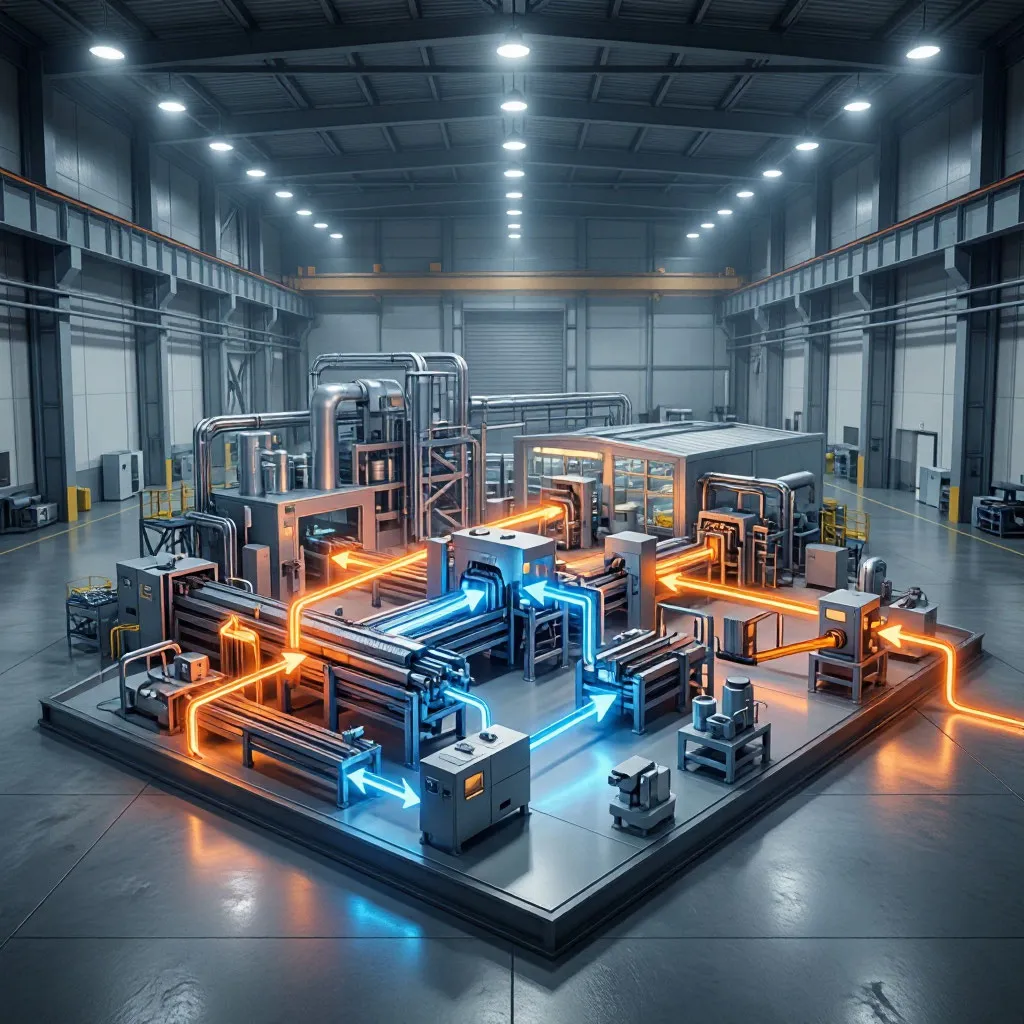
The steady hum of heavy machinery is the lifeblood of any modern industrial facility. In sectors ranging from mining and quarrying to chemical processing and power generation, massive equipment like crushers, screeners, and pneumatic filters form the backbone of daily revenue. When these vital components begin to show signs of mechanical fatigue, the prospect of taking them offline for maintenance triggers immediate financial concern. For business leaders, the central challenge is not merely technical: it is a race against the clock to execute essential upgrades without paralyzing the entire production line. Achieving this balance requires a shift from reactive repair strategies to a highly coordinated, proactive methodology.
The high stakes of production halts in heavy industry
Every minute an industrial plant stands silent represents a direct hit to the corporate bottom line. In high-volume operations, such as aggregate processing or mineral extraction, a single offline conveyor belt or a jammed primary crusher can stall downstream processes, leaving hauling fleets idle and customer orders unfulfilled. Unscheduled shutdowns are particularly damaging, as they lack the logistical preparation that makes planned interventions manageable.
To protect operational margins, forward-thinking asset managers treat maintenance not as an isolated engineering task, but as a critical business transition. Minimising downtime requires synchronising mechanical expertise, material logistics, and safety protocols into a single, cohesive plan. This approach ensures that when a machine is switched off, every second of its idle time is utilized productively, paving the way for a swift and safe return to full capacity.
Strategic pre-planning: the foundation of rapid turnarounds
A successful refurbishment project is won or lost long before the first wrench turns on the factory floor. The most common cause of extended downtime is not the complexity of the mechanical work itself, but logistical friction: waiting for a missing seal, searching for specialized rigging gear, or realizing that a crucial electrical technician is unavailable. Eliminating these friction points requires a comprehensive pre-planning phase that addresses every physical and operational variable.
To execute a seamless modernization program without interrupting the broader supply chain, project managers must adopt a highly structured preparation methodology. This preparatory phase ensures that all potential engineering bottlenecks are identified and resolved before any heavy machinery is isolated or disassembled. The list below outlines the essential pre-shutdown steps that must be completed to guarantee a swift and predictable asset turnaround:
- Comprehensive baseline audit: establishing the exact current wear levels and performance metrics of the existing machinery.
- Pre-fabrication of wear components: manufacturing all required liners, shafts, and structural plates off-site prior to the shutdown window.
- Tooling and rigging staging: positioning all heavy cranes, specialized hydraulic torque wrenches, and safety equipment adjacent to the work area.
- Vendor and specialist coordination: aligning the arrival schedules of third-party technicians, electrical engineers, and alignment specialists.
- Contingency spare provisioning: stocking long-lead spare parts on-site to mitigate the risk of discovering secondary defects during disassembly.
By systematically clearing these milestones prior to halting the production line, engineering teams can transition immediately from operational status to active mechanical intervention. This proactive approach eliminates the traditional delays associated with waiting for parts or specialized tools, ensuring that the actual hands-on work begins the moment the machinery is locked out and isolated.
Evaluating asset life extension: refurbishment versus replacement
When dealing with aging capital assets such as heavy-duty crushers, industrial filtration systems, and long-run conveyor networks, project directors must carefully evaluate whether to invest in comprehensive rebuilding or completely replace the machinery. This evaluation relies on balancing short-term capital expenditures against long-term operational reliability and production capacity. The comparison below provides a practical decision framework for analyzing these two approaches across different operational and financial parameters:
| Operational parameter | Equipment refurbishment services | Full machinery replacement |
|---|---|---|
| Initial capital investment | Moderate; typically 30% to 50% of the cost of new equipment | High; requires significant upfront capital expenditure |
| Lead time and delivery | Short; focused on sourcing specific components and localized rebuilds | Long; subject to global supply chain delays and manufacturing queues |
| Structural modification | Minimal; fits directly into the existing foundations and pipework | High; often requires extensive civil works and structural alterations |
| Expected asset lifespan extension | Moderate; adds another 10 to 15 years of reliable operational life | Maximum; resets the asset lifecycle back to zero |
| Commissioning complexity | Low; existing systems require only recalibration and testing | High; demands complete integration of new control systems and protocols |
| Operator retraining requirements | Negligible; the overall operational interface remains familiar | Substantial; operators must learn entirely new digital control systems |
Analyzing these factors helps organizations choose the most financially viable pathway that aligns with their immediate production schedule and long-term asset management strategy. In many cases, opting for specialized equipment refurbishment services provides a much faster return on investment while avoiding the massive civil engineering costs associated with preparing foundations for entirely new machines.
Execution mastery during industrial plant commissioning
Once the mechanical refurbishment is complete, the project enters its most critical phase: bringing the machinery back to life. This process is not as simple as flipping a switch; rather, it is a highly controlled progression of tests designed to verify the integrity of every component under increasing levels of stress. Rushing this stage to meet a deadline is a primary cause of premature equipment failure and extended post-project downtime.
Successful industrial plant commissioning depends on a clear separation between dry and wet testing phases. During dry testing, the machinery is run empty to verify electrical connections, sensor calibration, and rotational directions. Only when the engineering team is completely satisfied with these baseline diagnostics does the machine transition to wet testing, where raw materials are introduced incrementally. This gradual ramp-up allows engineers to monitor thermal behavior, vibration patterns, and power draw, making micro-adjustments in real-time to optimize long-term operational efficiency.
Safeguarding human capital during heavy machinery maintenance
The physical environment of a major industrial shutdown is highly complex, often characterized by confined spaces, overhead lifts, and multiple trade teams working in close proximity. In this high-pressure atmosphere, safety can never be compromised for the sake of speed. A single serious safety incident will instantly halt a project, resulting in far greater downtime and human cost than any planned maintenance window could ever justify.
To maintain a flawless safety record during intense heavy machinery maintenance campaigns, project leaders must establish clear lines of communication and strict control measures. This involves implementing robust lockout-tagout (LOTO) procedures, conducting daily toolbox talks, and ensuring that every individual on site is fully qualified for their specific tasks. The following points highlight the best practices that commissioning teams must execute to transition refurbished machinery safely back into the operational cycle:
- Multi-point isolation verification: ensuring all electrical, hydraulic, and pneumatic energy sources are physically locked out and tested before work begins.
- Continuous gas monitoring: testing the atmosphere in confined spaces, such as crusher cavities or filtration vessels, before allowing technician entry.
- Dedicated exclusion zones: establishing physical barriers around active rigging and lifting areas to protect ground personnel from overhead hazards.
- Dynamic risk assessments: updating the safety protocols on site as soon as physical conditions or weather patterns change during the shift.
- Collaborative shift handovers: conducting formal briefings between outgoing and incoming crews to transfer critical safety and progress information.
Adhering to this progressive start-up sequence ensures that any minor installation errors are detected and corrected before they can cause catastrophic failure under full operational load. It provides a structured bridge between mechanical completion and steady-state production, safeguarding both the newly refurbished asset and the personnel operating it.
Conclusion
Minimising downtime during major industrial upgrades is an achievable goal when planning is treated as an exact science. By combining strategic pre-planning, expert equipment refurbishment services, and disciplined industrial plant commissioning protocols, business owners can protect their operational capacity and extend the life of their most valuable assets. Ultimately, the true value of a well-executed maintenance campaign lies in the peace of mind it delivers: knowing that your heavy machinery is primed to operate at peak efficiency, supporting your business growth for years to come.