Safe demolition of high-rise industrial structures: risk management and environmental compliance
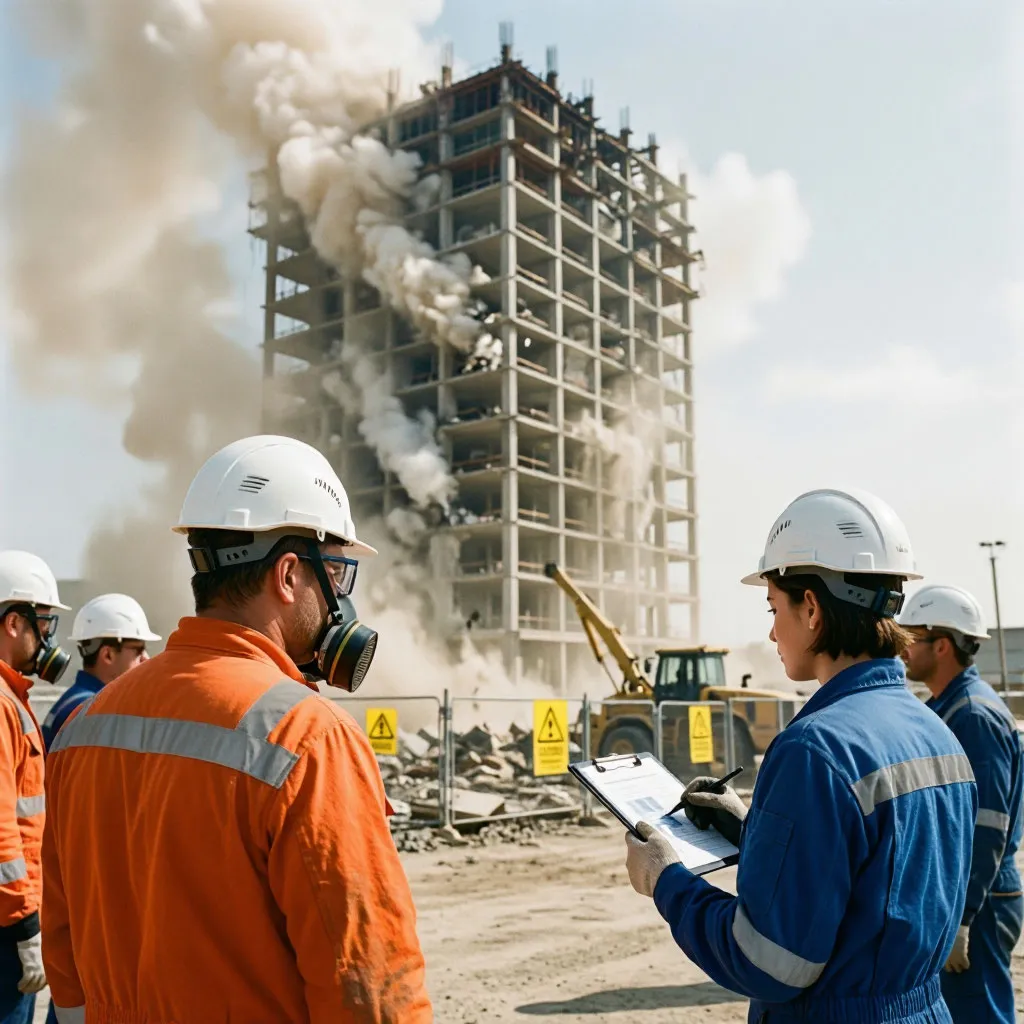
The skylines of many British industrial towns and cities are defined by decommissioned coal-fired power stations, chemical plants, and historic manufacturing complexes. As the nation transitions toward a low-carbon economy, these aging, high-hazard structures must be safely removed to make way for modern housing, commercial hubs, and green spaces. However, bringing down structures that stand over 100 meters tall—such as concrete cooling towers, masonry chimneys, and steel-framed boiler houses—presents some of the most complex engineering challenges in the modern construction sector. Executing these projects requires a flawless combination of structural physics, advanced mechanical systems, and highly disciplined safety management to protect nearby communities and the natural environment.
The unique challenges of vertical deconstruction
Unlike standard low-rise buildings, tall industrial assets possess immense gravitational energy, meaning that any uncontrolled structural failure can have catastrophic consequences for surrounding areas. Over decades of operation, these structures have been exposed to high temperatures, chemical vapors, and mechanical stresses, which can degrade the integrity of the concrete and steel in unpredictable ways. Therefore, engineers cannot rely on original construction blueprints alone when planning a demolition sequence.
To mitigate these risks, specialized industrial demolition contractors UK companies trust must conduct thorough structural investigations before any physical work begins. Using 3D laser scanners, drone-mounted cameras, and core-drilling technology, engineering teams build a highly accurate digital model of the structure’s current physical state. This data is used to calculate the exact structural behavior during deconstruction, allowing managers to predict load-transfer paths and prevent premature collapses that could endanger ground-based technicians.
Preparing the ground through structured enabling works
Before a high-reach excavator can position its tracks on site or an explosive charge can be placed, the ground surrounding the structure must be prepared to handle immense physical forces. This preparatory phase is critical, as the impact of falling debris can cause severe ground shockwaves, potentially damaging underground gas mains, high-voltage cables, or nearby building foundations.
To ensure that a site is fully prepared to handle the immense physical impact of a vertical collapse or high-reach mechanical dismantling, engineers must execute a series of preparatory procedures. These steps stabilize the surrounding environment and protect underground assets before any structural demolition commences:
- Site boundary establishment and security: erecting high-security fencing and installing CCTV monitoring systems to prevent unauthorized access.
- Utility isolation and diversion: physically disconnecting gas, electricity, and water lines to prevent accidental ruptures during ground impact.
- Hazardous material remediation: identifying and safely removing asbestos, lead paints, and chemical residues from the structural shell.
- Ground protection installation: laying heavy steel plates or timber mats to protect buried culverts and municipal sewer networks.
- Structural temporary propping: installing structural supports inside adjacent buildings to prevent vibrations from causing structural damage.
Executing these preliminary civil enabling works ensures that the physical demolition phase does not compromise adjacent live operations or municipal infrastructure. By establishing a clean, secure, and structurally stable perimeter, contractors can focus entirely on the delicate process of bringing down the high-rise asset safely.
Assessing demolition methodologies for vertical structures
Selecting the most appropriate demolition method requires a thorough evaluation of site geometry, proximity to adjacent structures, and local environmental sensitivities. The matrix below compares the two primary techniques used to bring down tall industrial structures, assessing their suitability across various operational and risk parameters:
| Technical parameter | Explosive implosion | High-reach mechanical deconstruction |
|---|---|---|
| Primary mechanism | Controlled gravity collapse initiated by micro-second delay charges | Piece-by-piece dismantling using specialized long-reach excavators |
| Site footprint requirement | Massive; demands extensive exclusion zones and road closures | Compact; restricted to the immediate vicinity of the structure |
| Structural suitability | Excellent for tall, reinforced concrete chimneys and cooling towers | Ideal for steel-framed structures, boilers, and urban chimneys |
| Execution timeline | Weeks of preparation culminating in a split-second event | Gradual, continuous progress over several weeks or months |
| Vibration impact | High, short-duration seismic shock during the structure’s fall | Low, continuous vibration over the course of the project |
| Weather sensitivity | High; wind direction and low cloud cover can delay the blast | Moderate; high winds can restrict high-reach boom operations |
Choosing between these two primary deconstruction pathways dictates the entire logistics and safety profile of the project. While explosive demolition offers unmatched speed, it is often restricted by urban density, making high-reach mechanical dismantling the preferred choice for sites located adjacent to active railways, roads, or residential communities.
Prioritizing environmental compliance and circular economy principles
Modern high rise structure demolition is no longer simply about clearing a site; rather, it is a highly regulated resource-reclamation process. Tall industrial structures often contain thousands of tons of high-grade concrete, structural steel, and valuable metals that can be recycled back into the construction supply chain. Salvaging these materials is a priority for forward-thinking developers who want to meet green building standards and minimize landfill tax liabilities.
Tall industrial structures often contain a complex mix of heavy concrete, structural steel, refractories, and environmental contaminants. To minimize the ecological footprint of the demolition and comply with strict national waste management regulations, contractors must implement structured mitigation programs:
- High-pressure water misting: deploying misting cannons to suppress dust plumes generated by falling concrete and brick.
- On-site concrete crushing: processing structural masonry on-site to produce high-grade aggregate for future construction.
- Acoustic monitoring barriers: installing sound-dampening curtains around the perimeter to protect local wildlife and residents.
- Real-time vibration tracking: placing seismographs at the boundaries to monitor and record structural waves during high-impact phases.
- Rigorous waste segregation: separating ferrous and non-ferrous metals, brick, timber, and hazardous elements into dedicated streams.
Implementing these green protocols allows modern contractors to divert up to 98% of demolished materials away from landfills. By processing waste directly on-site, organizations also reduce the heavy truck traffic in local communities, turning a potentially disruptive demolition project into an environmentally responsible reclamation program.
The critical role of specialized expertise in modern demolition
The success of any high-rise demolition project relies heavily on the experience and competence of the personnel on the ground. Demolition is a highly specialized branch of structural engineering that requires a deep understanding of physics, metallurgy, and chemistry. Attempting to execute a complex deconstruction project using standard civil construction crews is a recipe for disaster, as they lack the training to identify the subtle signs of structural instability or manage hazardous industrial materials safely.
By partnering with accredited demolition specialists, asset owners can ensure that their projects are executed in full compliance with the latest safety legislation, including the Construction (Design and Management) Regulations 2015. These professionals bring not only advanced mechanical systems and robotic tooling but also a disciplined safety culture that prioritizes risk elimination at every stage of the project.
Conclusion
The safe demolition of high-rise industrial structures is a testament to modern engineering precision, demonstrating how even the most hazardous environments can be reclaimed safely and sustainably. By combining rigorous structural analysis, meticulous civil enabling works, and advanced environmental protection protocols, contractors can transform complex industrial brownfields into clean, productive sites. Ultimately, the true measure of a successful demolition project is not just how quickly a structure is brought down, but how safely and cleanly the land is returned to the community, paving the way for the next chapter of sustainable economic development.