Trenchless technology vs. deep open-cut sewers: choosing the right utility installation method
Beneath the bustling streets of British cities lies a sprawling, invisible labyrinth of Victorian brick sewers, modern concrete water mains, and high-pressure utility conduits. Over time, ground movement, tree root intrusion, and chemical corrosion take a heavy toll on these buried assets. When these essential networks require upgrading or repair, civil engineers face a fundamental, high-stakes decision: do they excavate the earth from the surface down, or do they tunnel through it from within? Selecting the wrong methodology can trigger millions of pounds in cost overruns, gridlock local transportation networks, and cause severe environmental disruption. Balancing these competing demands requires a deep understanding of both traditional and modern excavation techniques.
The evolving paradigm of underground utility management
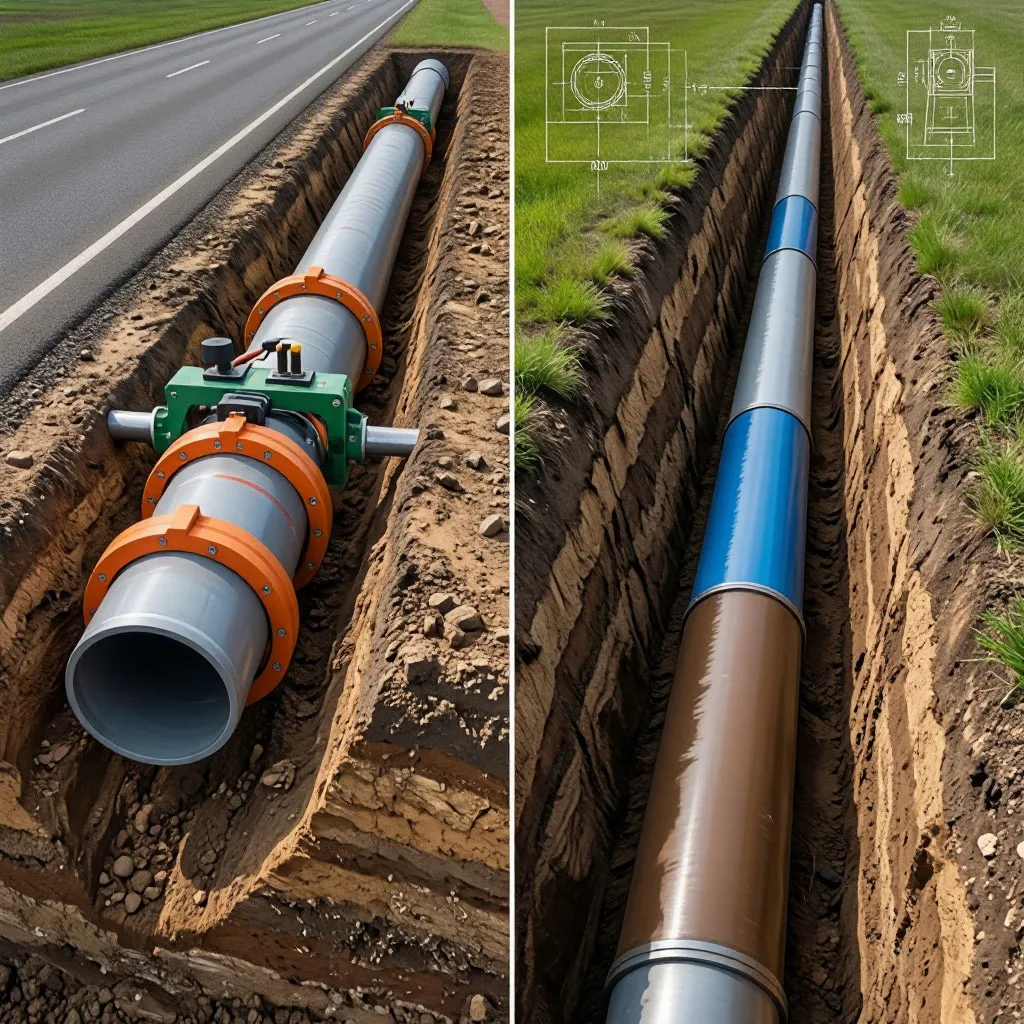
Historically, the approach to repairing buried pipes was straightforward but disruptive. If a sewer collapsed or a water main cracked, civil teams simply brought in excavators, dug a massive trench, replaced the damaged section, and backfilled the void. While this method is highly visible and direct, it imposes an immense burden on the surrounding environment. In densely populated urban areas, opening up a street means closing lanes, diverting public transport, and disrupting local businesses, which often incurs heavy financial penalties from municipal authorities.
Over the past few decades, the development of steerable drilling rigs, specialized polymers, and robotic camera systems has offered an alternative pathway. This shift toward subterranean engineering allows contractors to install, repair, and replace pipes with minimal surface disruption. Rather than viewing every utility project through the lens of heavy excavation, modern asset managers treat underground civil works as a precise, surgical intervention.
Deep open-cut excavation: when traditional methods remain unmatched
There are many scenarios where traditional methods are not merely preferred, but technically mandatory. A deep open cut sewer installation involves digging a continuous trench along the entire path of the pipeline to expose the target area. This method provides the engineering team with complete, unrestricted physical access to the utility corridor. Such visual and physical access is highly valuable when installing entirely new networks where no existing pathway exists, or when the existing pipe has suffered a total structural collapse that prevents the passage of internal tools.
Furthermore, deep open-cut methods allow for the direct installation of complex gravity-fed sewer systems, which require incredibly precise gradients over long distances. In these situations, even a tiny deviation of a few millimeters can disrupt the flow, causing chronic silt buildup and blockages. Standard excavation allows engineers to physically lay bedding materials and verify gravity gradients using laser levels before any pipe sections are joined.
Trenchless technology: a surgical approach to pipe rehabilitation
In stark contrast to open trenches, trenchless technology UK standards rely on utilizing small, targeted access shafts to perform extensive underground work. Rather than digging up miles of roadway, contractors excavate a launch pit and a reception pit, using the space between them to install or repair conduits. This category of engineering encompasses several highly specialized techniques, including horizontal directional drilling (HDD), micro-tunnelling, pipe bursting, and cured-in-place pipe (CIPP) lining.
These methods are particularly valuable for pipeline rehabilitation utilities operating in historic city centers or environmentally sensitive areas. By eliminating the need to dig up the surface, trenchless methods preserve mature trees, protect historic pavements, and prevent traffic congestion. Additionally, because the bulk of the work occurs underground, the overall carbon footprint of the project is dramatically reduced, as there is far less need for heavy trucks to transport excavated soil and fresh aggregate back and forth.
Analytical comparison of utility installation methodologies
Selecting between surface-level excavation and subsurface rehabilitation requires a rigorous analysis of site-specific conditions, project depths, and local environmental sensitivities. Each approach offers distinct engineering advantages and carries specific logistical constraints that directly impact the overall project delivery timeline. The comparative matrix below evaluates both methodologies across key technical and economic performance indicators to assist utility providers in making an informed selection:
| Performance indicator | Trenchless technology UK methods | Deep open cut sewer installation |
|---|---|---|
| Surface disruption | Minimal; restricted to small launch and reception pits | High; requires a continuous trench along the pipeline path |
| Suitability for congested areas | Excellent; avoids existing surface infrastructure and traffic | Poor; causes significant disruption to roads and buildings |
| Dependence on soil conditions | High; highly sensitive to hard rock or shifting cobbles | Moderate; shoring systems can stabilize most ground types |
| Capital equipment cost | High; requires specialized guidance systems and rigs | Low; utilizes standard excavators and trench boxes |
| Carbon footprint | Low; minimal excavation reduces transport and material use | High; large volumes of soil require transport and disposal |
| Ability to change pipe size | Limited; typically restricted to similar or slightly larger sizes | Unlimited; trenches can be widened to fit any pipe diameter |
This systematic comparison demonstrates that neither method holds a complete monopoly over modern civil works. While subsurface techniques dramatically reduce surface disruption and expedite urban project delivery, conventional excavation remains the definitive solution when severe structural damage or highly unpredictable ground conditions prevent the safe passage of subterranean tooling.
Executing trenchless operations: the phased pathway to subsurface renewal
Implementing a non-disruptive pipeline upgrade requires a highly disciplined operational sequence to ensure that the existing ground structure is not compromised during the installation. Because the work occurs entirely out of sight, engineers rely heavily on precise electronic telemetry and calibrated mechanical systems to monitor progress. The following steps outline the essential phases of executing a successful trenchless utility installation or repair scheme:
- Pre-installation CCTV inspection: driving a robotic camera through the pipe to assess structural integrity and map lateral connections.
- High-pressure hydrodynamic cleaning: removing silt, scale, and root intrusions to restore the original internal diameter of the conduit.
- Path preparation or guidance calibration: establishing the precise electronic pathway for directional drills or preparing the lining materials.
- Pulling or curing the new conduit: pulling a high-density polyethylene pipe through the old line or inflating and curing a resin-saturated liner.
- Final quality verification and lateral reinstatement: running a post-installation camera check and using robotic cutters to reopen service connections.
Following this progressive operational sequence guarantees that the newly installed lining or pipe string meets strict national performance specifications without risking surface subsidence. By validating each phase through independent sensor data, utility contractors can deliver a structural design life that matches or exceeds that of a completely new, open-cut asset.
Situations demanding traditional excavation techniques
Despite the rapid technological advancements in steerable drilling and cured-in-place lining, conventional civil engineering methods remain essential for solving complex structural problems. Certain subterranean scenarios make the deployment of computerized tunneling rigs completely impractical or highly dangerous. The list below highlights the primary environmental and structural conditions that mandate the use of traditional open-trench methods:
- Complete structural collapse of the host pipe: when the old line has flattened, preventing the insertion of cameras, liners, or bursting heads.
- Severe vertical or horizontal alignment deviations: when the existing pipe has settled or shifted so severely that a straight liner cannot pass through.
- Extreme utility congestion in shallow corridors: when the density of surrounding gas, electric, and fiber optic lines makes blind drilling too risky.
- Need for substantial capacity upgrades: when the diameter of the new sewer must be doubled or tripled to accommodate rapid regional population growth.
- Highly unstable, saturated sandy soils: when the surrounding ground lacks the cohesion required to maintain an open tunnel during drilling operations.
Identifying these physical limitations during the early feasibility stage prevents catastrophic tooling failures and keeps project budgets on track. When faced with these specific challenges, executing a well-planned open excavation with robust trench support systems is far safer and more cost-effective than attempting to force a trenchless solution into an unsuitable environment.
Balancing capital expenditures with wider social and environmental costs
When evaluating the economics of a utility project, engineers must look beyond the direct contract price. On paper, trenchless technology UK methods can sometimes carry a higher initial mobilization cost than renting a standard excavator. However, when you factor in the indirect costs of deep excavation—such as traffic management fees, road reinstatement charges, and compensation claims from local businesses—trenchless solutions often emerge as the more cost-effective option.
Furthermore, modern sustainability goals are pushing the industry to account for carbon emissions. Traditional excavation requires massive amounts of diesel fuel to dig, move, and backfill trenches, alongside the carbon emissions generated by producing new asphalt and concrete. By drastically reducing the volume of imported materials and keeping traffic flowing smoothly, trenchless methods align perfectly with net-zero targets and green building certifications, making them a preferred choice for forward-thinking municipal planners.
Conclusion
Ultimately, the choice between trenchless technology and deep open-cut excavation is not a matter of selecting the most advanced method, but the most appropriate one for the specific challenge at hand. While trenchless methods offer a highly efficient, low-impact option for urban pipeline rehabilitation utilities, traditional open-cut installations remain irreplaceable for complex alignments and major capacity upgrades. By carefully analyzing soil structures, urban density, and total project lifecycles, civil engineering teams can select the optimal methodology, ensuring that the critical networks keeping our society running are delivered safely, sustainably, and within budget.